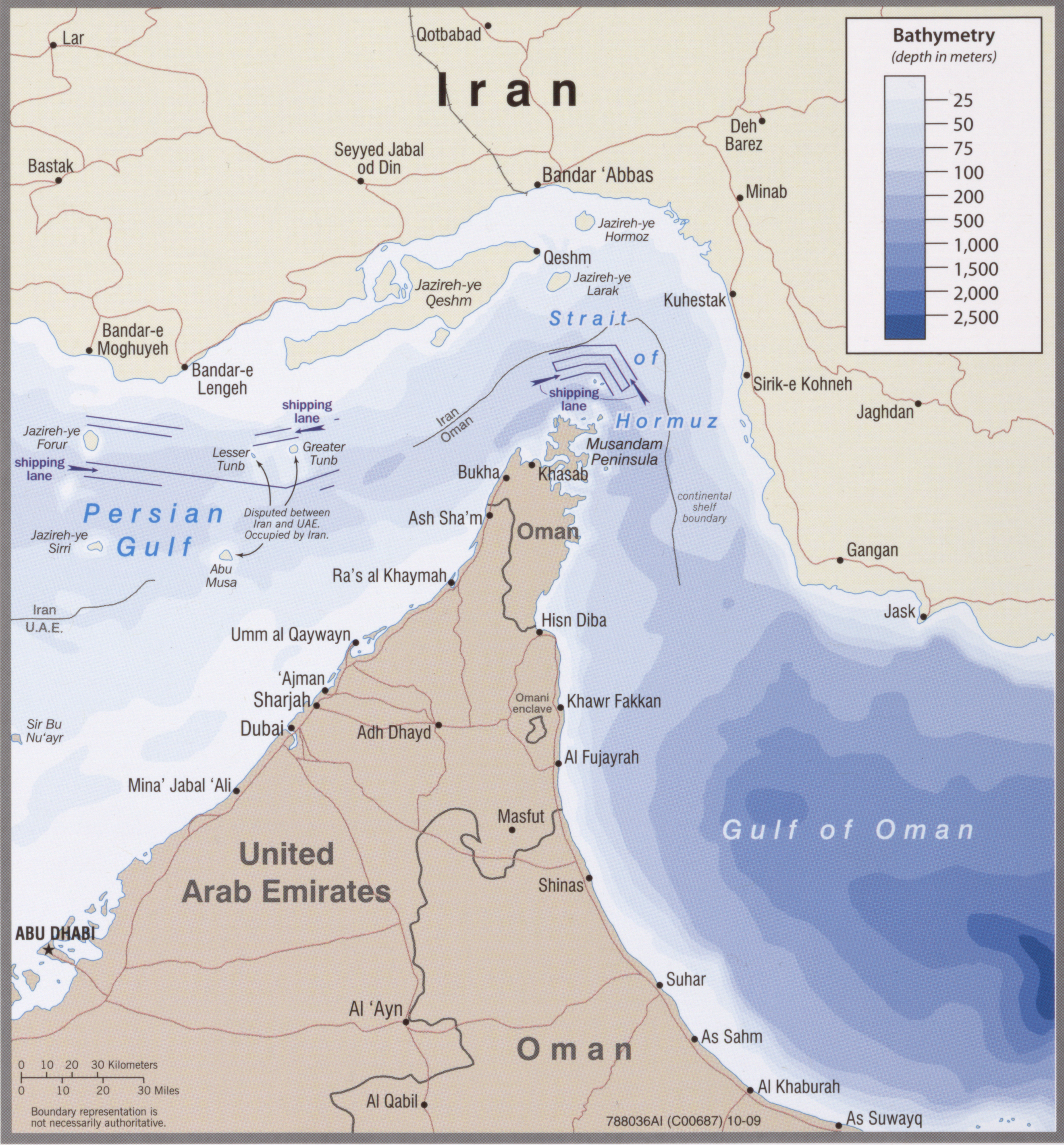
Over years working in oil and gas and investment management, I've learned one thing that always holds true: the energy market is never really calm; it's just waiting for the next trigger. That trigger came again in mid-July, after barely a month of calm, from the narrow strait through which about a fifth of the world's oil supply passes: the Strait of Hormuz.
What Happened, in Brief
On 12 July 2026, the United States military struck around 140 targets in Iran, missile and drone launch sites, ammunition depots, and communications infrastructure, to cripple Iran's ability to attack commercial vessels in the Hormuz strait. Tehran retaliated by targeting Bahrain, Kuwait, Qatar, and the United Arab Emirates. Iran's Islamic Revolutionary Guard Corps (IRGC) then announced an indefinite closure of the Strait of Hormuz, stating the closure would remain in effect until “US intervention in the region ends.” Last Saturday (18/7), the IRGC claimed two tankers exploded due to mines it alleged were planted by US intelligence, a claim CENTCOM immediately denied as “inconsistent with the facts.”
Oil prices responded: Brent rose more than 4 percent on 13 July toward US$78.82 per barrel, then by mid-July was reported to have briefly topped US$85, with WTI moving in the US$79-80 range. This wasn't the year's first spike; there had earlier been a ceasefire and a US-Iran MOU on 18 June that reopened Hormuz and pushed prices down, before the new escalation in mid-July reversed it again.

Why This Isn't Just a “War, So Prices Rise” Story
Here's the part I think often gets lost in the coverage: in the middle of this crisis, OPEC+ kept raising its production quota. This was the fourth consecutive increase since the previous Hormuz closure, adding around 188,000 barrels per day for July, bringing the cumulative quota increase since April to nearly 600,000 barrels per day. It's this already-oversupplied market that has analysts expecting Brent to hold in the high-US$70s range through August-September, not spike wildly, because the market isn't pricing in a full-scale war. The geopolitical crisis and the market's supply mechanics are running on separate tracks, and that's what makes this story more complicated than just “the Middle East is heating up, so oil prices must be exploding”.
Reaching Indonesia: It's Not Just About the Gas Pump
Indonesia has been a net oil importer since 2003, so every global price shock immediately squeezes the state budget (APBN) from two sides at once. Based on the 2026 APBN's sensitivity: every US$1 per barrel increase in the Indonesian Crude Price adds around Rp3.5 trillion in revenue, but spending (mainly energy subsidies) rises by around Rp10.3 trillion, widening the budget deficit by around Rp6.8 trillion for each such increase. The oil-and-gas trade balance itself already ran a US$12.28 billion deficit through January-May 2026, ending a 72-month streak of consecutive surpluses, driven by the sharp oil price spikes earlier this year. The transmission channel isn't limited to the gas pump either: transportation costs rise, distribution costs balloon, industrial production costs increase, all the way through to food prices.⁵
For Aceh: Two Opposing Sides of the Ledger
This is the part I find most interesting, and the one most often missed when discussing Aceh and world oil prices.
The first side, short-term, is almost certain to be felt: Aceh bears the same national mechanism as other regions; pressure on fuel subsidies and the state budget means pressure on the fiscal space for transfers to the regions, and rising national logistics/transportation costs automatically push up the cost of distributing goods to Aceh, which has long depended on sea and land routes from Java and other parts of Sumatra. This isn't speculation; it's the same APBN and supply-chain logic that applies across Indonesia, and Aceh is not exempt from that mechanism.
The second side is long-term and structurally different: Aceh's own energy interests are actually tied more to gas prices than to crude oil prices. Blok Andaman, with an estimated resource potential of around 4,965 MMBOE and initial production from Mubadala projected at around 300 MMSCFD, has a gas price of around US$9 per MMBtu, with a scenario of rising to around US$10 per MMBtu if a gas pipeline is built. The Aceh government, through BPMA, has requested that this gas be processed onshore via KEK Arun, rather than through an offshore floating facility, so that the added value stays in Aceh instead of simply passing through.
I should be upfront: these two sides run on different clocks. The Hormuz crisis is a short-term shock in the crude oil market; the investment feasibility of Blok Andaman and KEK Arun is a long-term structural decision in the gas market, which has its own price dynamics and doesn't automatically move up and down with last week's tanker attacks. If anyone claims “Aceh profits from the Iran war because it has gas,” that's too simple a claim, and I don't have enough evidence to support it. What I can say with confidence: a structurally higher global energy price regime, if it persists, does tend to improve the feasibility math for large-scale gas projects like Andaman, but that's a story measured in years, not weeks.
Closing Thought: Hedging
Back to the question in the title. OPEC+ raising its quota in the middle of a crisis is the market's own form of hedging against an overblown scarcity narrative. But Indonesia's state budget, without adequate hedging instruments to manage volatility in imported energy prices, absorbs the impact directly through subsidies. And businesses or households in Aceh, just like anywhere else, don't have the luxury of hedging against fuel price hikes and distribution cost increases once they happen.
There's only one thing we can really do: understand exactly which channel this shock will actually travel through to reach us, so we don't misplace blame (or misplace hope) on a cause that isn't really the one responsible. And hopefully, the Aceh government will soon have a specific policy on this to protect the region's economy and its people.
Panduan bacaan pendamping tersedia
Glosarium istilah, rincian dampak fiskal APBN, dan lima rekomendasi kebijakan untuk Aceh, dalam satu dokumen ringkas.
Download Navigasi Geopolitik Selat Hormuz (PDF)Sources and references
- Tribunnews.com (13 Juli 2026), “AS Kembali Serang Selat Hormuz, Eskalasi Perang Iran Berlanjut.”
- ANTARA News, “Iran tutup Selat Hormuz hingga waktu tak ditentukan.”
- Al Jazeera (13 Juli 2026), “Oil prices jump as US and Iran trade attacks over Strait of Hormuz.”
- Capital.com (30 Juni 2026), “Crude Oil Price Forecast | US-Iran Ceasefire and OPEC+ Supply.”
- Kontan, industri.kontan.co.id (15 Juli 2026), “Harga Minyak Kembali Tembus US$ 80 per Barel, Ini Dampak ke Harga BBM Hingga APBN.”
- Prokalteng/Jawapos (15 Juli 2026), “Eskalasi Konflik di Selat Hormuz Berpotensi Picu Lonjakan Harga Minyak, APBN Indonesia Terancam Tertekan.”
- Kontan, industri.kontan.co.id, “Defisit Neraca Dagang Migas Tembus US$ 12,28 Miliar Hingga Mei 2026, Ini Sebabnya.”
- Bisnisia.id, “Proyek Pipa Gas Blok Andaman Rp 6,6 Triliun Dipacu, Mubadala Siap Ekspansi 3 Blok Baru”; AJNN.net, “BPMA Beberkan Dua Permintaan Mualem soal Pengembangan Gas South Andaman.”
- Tribunnews.com (19 Juli 2026), “Iran Tuding Kapal Tanker Meledak Akibat Ranjau di Selat Hormuz, AS Sebut Klaim IRGC Tak Benar.”
Leave a Reply