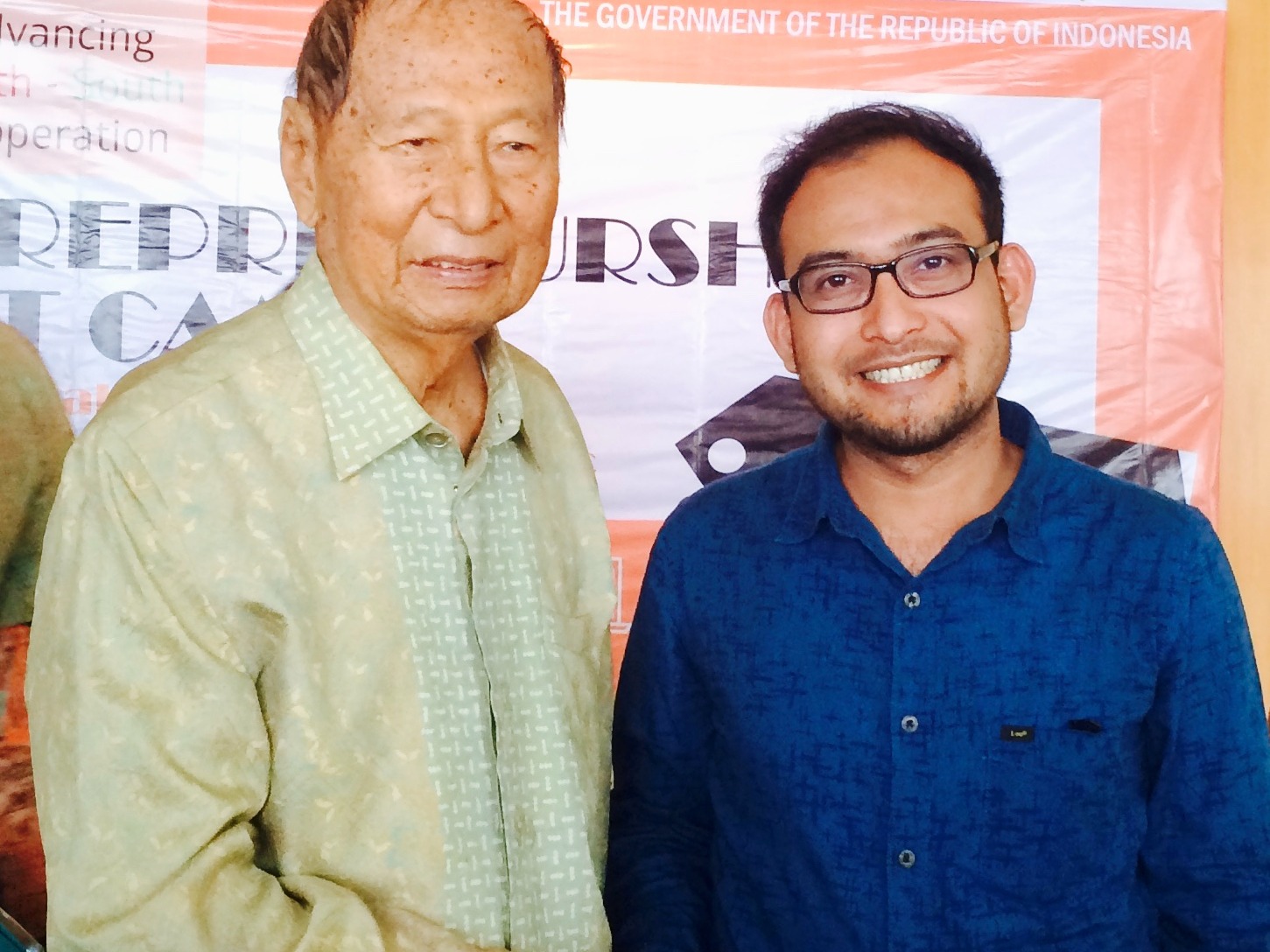
The customer is an important resource for information, inspiration, and innovation. This was said by Ciputra. This key phrase puts the focus of a business squarely on the person who benefits from it. Anyone who spends money to get our service, product, or work is a customer.
If we're employees, then our customers are our employer, our boss, and our coworkers. They're all sources of information, inspiration, and innovation. Our ability to give our best is the key to our success in becoming an Intrapreneur.
To get to know our customers better, we need to give our best in service, product, and work, something that can truly capture their minds and hearts, something that makes sure customers immediately think of us, come find us, and buy what we're selling. This isn't easy work.
We're often competing with our rivals for the hearts and minds of customers. Quite often, we end up making a product we think is good, even though it doesn't match the customer's taste or “budget” at all. This is a way of thinking that often misses what the customer actually expects.
That's why, since the customer is everything in business, we need to know and understand in detail what customers want and what they can afford to spend, so we play in the right “blue ocean” zone, not end up stuck in a “red ocean” instead.
In this respect, if we focus our attention on the wrong thing, everything we've prepared can fall apart. It can even bring real business risk, and it's not uncommon for it to make the business hard to sustain.
We often see how a company throws all its resources into serving customers and gathering information from them, using all kinds of methods.
Whether that's through watching CCTV footage, surveys, star ratings, or, in this digital era, gathering information and inspiration from customers entirely digitally. If a company hasn't set up a digital information system yet, it will even direct security staff and office assistants to help customers, because by helping them, staff come to understand customer behavior.
Bill Gates, the owner of Microsoft, once said, “your most unhappy customers are your greatest source of learning.” Well, this is something we rarely manage to apply or accept. We often end up arguing, even debating, with customers just to insist that what we did was already the best we could do. Does anyone not know Microsoft? Or Bill Gates? He was the world's second-richest person, according to Forbes, March 2019.
Still not convinced the customer is everything? Steve Jobs, founder of Apple Inc., said, “start by asking what the customer needs, and only then prepare the supporting technology.”

Starting to believe it now? But how do we actually make the customer our center of information? By seeking out and identifying the Customer's Problem. Then, once we know the problem, we start Thinking Through the Solution, this is what's meant by the customer as inspiration. Applying a solution that actually solves the customer's problem, and that the customer accepts, is what's called creating Innovation.
As business owners or employees, we can choose what area to work on and touch to bring a solution to the customer. It could be Design, Production, Marketing, Finance, HR, Transportation and Communication (Connectivity and Mobility), Partnerships, or Environment and CSR. It can be just one of these, or a combination. What matters most is staying continuously creative, because problems keep coming up, because customers are never fully satisfied.
Ellis Paul Torrance, in his book on Creative Thinking, lays out this framework:
- Fluency in generating ideas or alternative solutions when facing a problem.
- Flexibility in applying an idea and being able to give it room to adapt.
- Elaboration of various inputs so the idea becomes more mature and detailed.
- Originality, an idea that isn't ordinary.
If we can apply these four things every day to every problem customers face, in the world of work, and in our tasks and activities, we'll bring innovation to life.
Innovation is creativity that gets accepted, or bought, by the customer.
Now that we know two important principles for turning scrap into gold, and that scrap might well be ourselves, are we still worried because we feel like we have nothing? We shouldn't be. We have a mind and the energy that are gifts from God Almighty. All we need is the drive to try things outside our habits, and to throw far away the thought that we can “only manage this much.” Believe and trust that we can be more than we are right now.
Hold on to hope and to your dreams.
Make them real. (Mulyagusdin)
Note:
This piece draws its inspiration from the book The Entrepreneurship Ciputra Way. The opening question about using a diploma and a used two-wheeled vehicle as capital was inspired by Pak Ciputra's own story. Beyond being a businessman, he was also a lover of the arts, and in 1998, at the age of 50, he chose to rise again and reclaim his dreams. The results of his drive, creativity, and innovation can be seen below;
Leave a Reply